“Holy, holy, holy, is the Lord God Almighty, who was and is and is to come!” – Revelation 4:8
Holy, Holy, Holy was written by a man who revered God as wholly holy; a man who put such an effort into living for God that it eventually killed him.
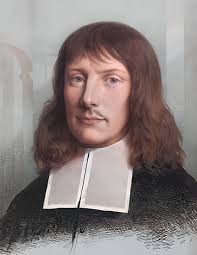
Reginald Heber was born in Cheshire, England, 1783. He came from well-off parents, allowing him to receive exceptional education throughout his early years. Reginald easily could have taken these blessings for granted, but he did not. For Reginald, failing his education would be to tell God that His gifts are undesirable. Therefore, Reginald learned the value of hard work through his appreciation of God’s gifts. In turn, he received top grades and was praised for his academic ability. Soon after completing his education, Reginald was ordained into the Anglican Church and became a minister.
Rather than using his great education and reputation to find the largest and most glamorous church to lead, Reginald chose a tiny church in the little village of Hodnet, England. Within his congregation, Reginald had a reputation for two things: being a devout man of God, and being a wonderful poet; the perfect recipe for a legendary hymn.
In 1823, Reginald was called to serve in India. He was still young – only 40 years old – and the responsibility was greater than his years. His title was Bishop of Calcutta, which made him leader over missions in India, the Island of Ceylon, and even all of Australia. During his time in India, Reginald worked tirelessly. Once again, he refused to squander this great gift from God. His chief ambition was to build a training school for local clergy so the area would have ministers long after Reginald was gone. Along with building the school, Reginald also traveled across India spreading the gospel.
Over the years, the intense climate and even more intense responsibility wore on Reginald’s health. Through the hardship, he never relented. Such an effort did he give that on one Sunday, directly after an outdoor sermon to a large group of Indians, Reginald dropped dead from heatstroke.
In death, Reginald’s work carried on, for it turned out that during his time at the tiny church in Hodnet, Reginald had written a number of hymns. He never sought publication; perhaps too humble, or perhaps thinking his work not good enough. But his wife saw the beauty in her husband’s work, and she put a collection of her husband’s hymns together and had them published. Fifty-seven hymns made up the collection, and all fifty-seven are still being used to this day. Of the collection, one stood out far above the others: