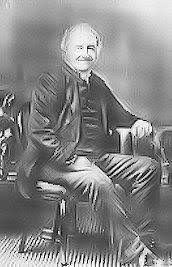
The China Inland Mission, which James Hudson Taylor had launched in 1865, was exposed to a series of persecution, including the evacuation of missionaries and the martyrdom of local Christians, which was ignited with the Boxer Uprising in 1900 and being aggravated in the nine-year-long Civil War. Nonetheless, the CIM, far from withdrawing from their evangelizing enterprise, marched forward. In 1829, “the Council of the China Inland Mission in China has been carefully surveying the whole field for which the Mission is responsible in China and its dependencies, and an appeal has been issued for two hundred new workers within two years.”
In support of the appeal, Frank Houghton, editorial secretary of the CIM and prolific hymn writer, wrote “Facing a Task Unfinished,” a hymn for the forward movement, to be sung at the CMI annual prayer conference scheduled in May, 1831. Printed in the January 1831 Issue of CIM’s magazine, China’s Millions, the hymn was diffused to Christians in England. Houghton reflects on the appeal and its fruition later in his book, China Calling, stating, “Actually 203 missionaries were added by the end of 1831, in answer to the prayers of thousands in all the home countries who, at family prayers, at meal times, in public and in private, sang from their hearts the chorus:
Lord, by the call of China’s need,
And by the love of Calvary,
Choose and send forth, we humbly plead,
Two hundred witnesses for Thee!”[3]
The concerted sung prayers through a hymn by the person, who had a firm conviction of the power of hymn singing, served as an indispensable steppingstone for the expansion of God’s Kingdom in China, especially in its period of the most severe persecution.
The first stanza, first of all, identifies the task to be fulfilled in response to Jesus’ last command on earth, the Great Commission (Matthew 28:19–20). It admonishes those under the grace of salvation for their spiritual lethargy and reminds them of the command, making Jesus known to those yet to be saved and inviting them into the realm of His salvific grace. Without their agency, how can the Gospel be preached and heard, so that the unreached will be saved? It is only through the beautiful feet of those who will bring the Good News (Romans 10:13–15). However, the execution of the task by human agents should be preceded by prayer, the means by which to get empowered with Jesus’ authority and power as He promised in Matthew 28:20, “I am with you always, even to the end of the age.”
The second stanza demonstrates the indispensability of prayer on the ground that “the struggle is not against flesh and blood, but against the world forces of this darkness and the spiritual forces of wickedness in the heavenly places” (Ephesians 6:12). Depicting the spiritually depraved state of the unreached, it implicitly urges that the heart for the lost should be developed as in the parable with the burdened heart of the shepherd, who leaves ninety-nine sheep to go after the one lost (Luke 15:4–7).
The third stanza reinforces the continuity of the missional task that has been carried out since its initiation in the apostolic period. In the particular context of China Inland Mission around 1830, it testifies to the feats of its forerunners including the founder Hudson Taylor, exhorting their followers to keep the missional zeal afire with the power of Jesus’ redemptive work and to run in the relay race of the Great Commission with the baton of the Gospel passed on to them. Further, it implies that the baton will continue to be passed on to the future generations until Jesus’ Second Coming.
The fourth stanza attributes all related to this unfinished task to the Holy Trinity. It recognizes God the Father as the sustainer, “who desires all people to be saved and to come to a knowledge of the truth [Gospel]” (1 Timothy 2:4), the Holy Spirit as the inspiration, who will empower His messengers to be Jesus’ witnesses to the ends of the earth (Acts 1:8), and Jesus as the very source, whose love compels His ambassadors to march for the reconciliation of sinners to God (2 Corinthians 5:20).